
|
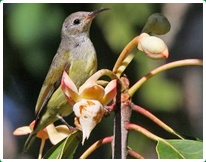
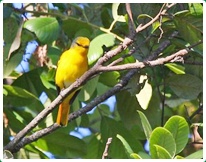
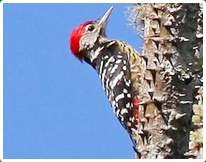
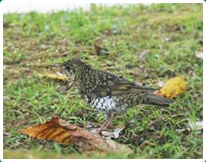
Birds in Chiang DaoSituated at the base of Doi Chiang Dao Thailand’s third highest mountain and on the edge of Chiang Dao Wildlife Sanctuary Malee’s is a great base for birdwatchers to explore the area. A total of at least 450 species have been identified in area with new species added annually and others no doubt waiting to be discovered. Chiang Dao is now a well established stop on most bird watching trips around the north and over two or three days it is possible to see 150 species or more including some which are difficult to see elsewhere in Thailand. Most birders soon head for the higher areas around the DYK sub-station,
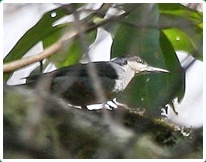
where multiple sightings of the localized and threatened Giant Nuthatch can
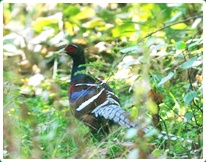
be almost guaranteed and with a little luck Hume’s Pheasant. Other rarer
species which can be seen here include Hodgson’s Frogmouth, Black-tailed Crake,
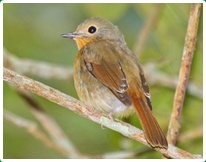
Rusty-naped Pitta, Sapphire Flycatcher and Scarlet Finch but luck and patience are
needed. The area is also excellent for many other species including Silver
Pheasant, several species of woodpecker, Great and Blue-throated Barbet,
Grey-headed Parakeet, Wedge and Pin-tailed Green Pigeon, Long-tailed Broadbill,
Orange-bellied Leafbird, Grey Treepie, Slender-billed and Maroon Oriole,
Chestnut-bellied Rock Thrush, Slaty-backed and Little Pied Flycatcher,
Yellow-cheeked Tit, many species of Bulbul, half a dozen species of
Phylloscopus warblers, Bianchi’s Warbler, White-necked Laughingthrush,
Rusty-cheeked Scimiter Babbler, Silver-eared Mesia, White-browed and
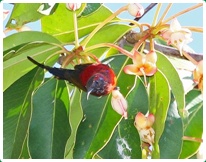
Chestnut-fronted Shrike Babbler, Grey-headed Parrotbill, Mr’s Gould’s Sunbird,
Spot-winged Grosbeak and Chestnut Bunting. This may also be the best area to
look for Deignan’s Babbler one of only two endemic Thai species, though the
taxon of this species is unclear and it maybe conspecfic with the common Rufous-fronted
Babbler. The higher areas above DYK to the summit are rarely visited by birders,
species know to be present here include White-browed and Chestnut-crowned
Laughthrush, Crested Finchbill, Brown-breasted Bulbul, Spectacled Barwing and
probably others that are only seen at higher altitudes. Much lower down the mountain the forest trails around Wat Tham Pha Plong within walking distance of Malee’s also offers some great bird watching. Due to the protection offered by the monastery and wildlife sanctuary Scaly-breasted Partridge and Red Junglefowl are common and Silver Pheasants are also occasionally seen. Now rare in the north Oriental Pied Hornbills can be seen most days from the temple steps early in the morning and again in the evening. Other noteworthy species seen in this area include both species of piculet, Bay, Bamboo and Rufous Woodpecker, Great Barbet, Orange-breasted and Red-headed Trogon, Blue-bearded Bee-eater, Hodgson’s Hawk Cuckoo, Violet and Emerald Cuckoo, Grey-rumped Treeswift, Mountain Imperial, Wedge-tailed and Pintail Green Pigeon, Rusty-naped and Blue Pitta, Silver-breasted and Long-tailed Broadbill, Green Magpie, Maroon Oriole, Large Woodshrike, Orange-headed Thrush, three species of Forktail (though Black-backed rare), White-tailed Robin, Sultan Tit, White-headed Bulbul, Asian Stubtail, Greater and Lesser necklaced Laughingthrush, Striped, Eye-browed and Pygmy Wren Babblers and White-hooded Babbler. Species also noted very occasionally in the area include Great Slaty Woodpecker, Banded Kingfisher, Collared Falconet, Hooded Pitta, Dark-sided Thrush, Green Cochoa, Golden-crested Myna, Grey-bellied Tesia and Pin-tailed Parrotfinch. Night birding can also be excellent along the road to temple and at the
temple, where Oriental Bay Owl, Mountain, Oriental and Collared Scops Owl,
Brown Hawk Owl, Spot-bellied Eagle Owl, Javan Frogmouth, Great-eared , Large
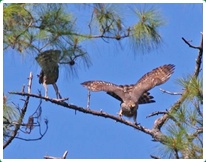
–tailed and Grey Nightjar have all been recorded just a short walk from Malees. Though the list of raptors recorded in the area is relatively large, densities are low and it is possible to go through the day without seeing any. Commonest species include Oriental Honey Buzzard, Shirk, Crested Goshawk, Crested Serpent Eagle and Common Buzzard. In the autumn (Sept-mid Nov) an overhead passage of raptors is also noted which includes northerly movement of Amur Falcon with a Thai record 1700 30th October 2010 and southerly movements of Oriental Honey Buzzard, Black Baza, Grey-faced Buzzard and Chinese Sparrowhawk. Other species also recorded some on only a handful of rolex replica sale include Jerdon’s Baza, Black Eagle, Black Kite, Himalayan Griffon Vulture (two October 2010), Pied Harrier, Rufous-winged Buzzard, Greater Spotted and Imperial Eagle, Rufous-bellied Eagle, Changeable and Mountain Hawk Eagle, Eurasian and Oriental Hobby. For those who want a break from forest birding a visit to rice paddies south of Chiang Dao town provides a good chance to catch up with some open country birds with Grey-headed Lapwing, Wire-tailed Swallow and Oriental Skylark almost guaranteed. Maps of trails in the area and several log books with both recent andhistoric sightings are available at Malee’s. Bird list of Chiang Dao >> |
Home | Price | Photo | Activities | Contact
Malee's Nature
Lovers Bungalows
144/2 M.5 Chiang Dao, Chiangmai 50170 Thailand
Phone : +66 (0)81 961 8387, e-mail : maleenature@gmail.com
Copyright 2016 www.maleenature.com